Read in 201927 recommended
Economics
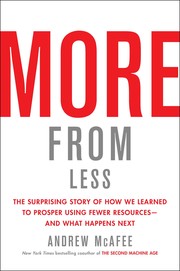 +
+More from Less: The Surprising Story of How We Learned to Prosper Using Fewer Resources―and What Happens Next
Andrew McAfee
An insightful read about how well-managed markets can lead to increased prosperity while, at the same time, reducing resource usage. Argues that environmental improvements have not solely been a product of regulatory initiatives but also, and importantly, are what people want. No one wants pollution: people want prosperity. If there’s a way to prosperity without pollution, that’s preferable to a polluted pathway. Technological innovation and development has carved and can continue to carve those pathways in the future.
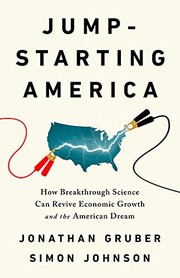 +
+Jump-Starting America: How Breakthrough Science Can Revive Economic Growth and the American Dream
Jonathan Gruber
Thoughtful, informative, detailed, data-backed. Makes a persuasive case for targeted public investment to spur private development.
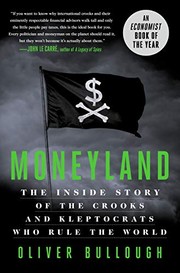 +
+Moneyland: Why Thieves and Crooks Now Rule the World and How To Take It Back
Oliver Bullough
A fascinating read on how money moves around the world (both offshore and onshore) and how interwoven it is with politics and power.
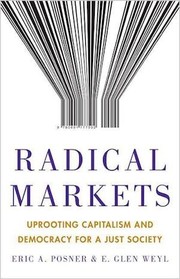 +
+Radical Markets: Uprooting Capitalism and Democracy for a Just Society
Eric A. Posner
A thought-provoking read. Honest and humble, with creative new ideas (some of which may work, some of which may not, but all of which deserve consideration and additional thought). I learned about quadratic voting thanks to this book, which I have to admit is a pretty cool concept.
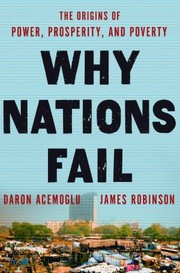 +
+Why Nations Fail: The Origins of Power, Prosperity, and Poverty
Daron Acemoğlu
Highly readable, with ample helpings of fascinating historical vignettes, this book looks at nations through the lens of their institutions. Specifically, their economic and political institutions, and whether each of these are inclusive (economic growth or political power has a broad base and percolate within the system) or extractive (economic growth or political power drain out of the system). A valuable lens of looking at the world, of looking at political and economic decisions (does this increase inclusivity? is there an appropriate level of centralization?)
History
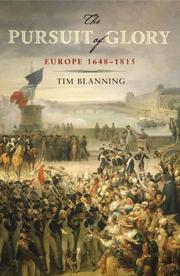 +
+The Pursuit of Glory: Europe 1648-1815
Timothy C.W. Blanning
A sweeping survey of a turbulent time in the history of Europe, leading up to the beginning of the Industrial Revolution. As a fan of the Europa Universalis IV grand strategy game, this book was a great complement to the game by providing deep historical background for the various nations and kingdoms that play a part.
 +
+The Death and Life of Great American Cities
Jane Jacobs
As a new resident in the West Village, this surprisingly timeless tract on the nature of American cities struck home. It teaches how to perceive the order in what would otherwise appear to be chaotic, disorganized completely. Many of its lessons appear to have gone unheeded in the decades since its publication. Reflective study of this book could lend insights for the cities of the future.
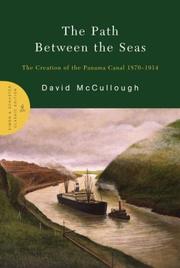 +
+The Path Between the Seas: The Creation of the Panama Canal, 1870-1914
David McCullough
Before reading this book, I had no idea France had first tried to construct a canal across the isthmus of Panama. An entertaining tale, skillfully told, takes the reader from those initial French attempts to the eventual American effort that culminated, through political and engineering challenges, into the canal that now exists.
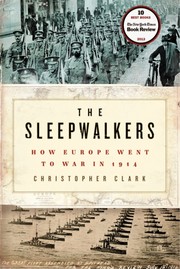 +
+The Sleepwalkers: How Europe Went to War in 1914
Christopher Clark
Sobering, accessible tale of exactly how things went off the rails in the lead up to World War I.
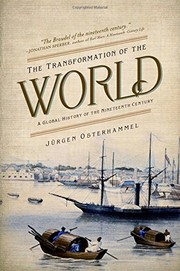 +
+The Transformation of the World: A Global History of the Nineteenth Century (America in the World)
Jürgen Osterhammel
Incredibly rich, even to the point of denseness. Lays out data and fact, country by country, continent by continent, but doesn’t always weave a story, often deliberately leaving interpretation to the reader. There’s no unifying narrative, no simple explanations: the raw complexity of the 19th century is laid bare and examined, meticulously, from almost every angle.
Science fiction
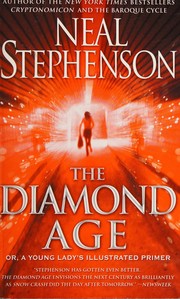 +
+The Diamond Age: Or, a Young Lady's Illustrated Primer
Neal Stephenson
As someone who enjoys an occasional costume drama miniseries or a novel by Jane Austen, this was an enjoyable tale set in a neo-Victorian future. Hard to believe it was written in 2003 as it correctly anticipated many of the aspects of an always-on, digitally connected world where people can work from anywhere.
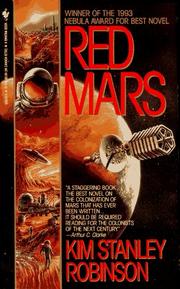 +
+Mars Trilogy
Kim Stanley Robinson
Red Mars · Green Mars · Blue Mars
I remember trying to read Red Mars as a kid when I was 10 or 11 years old. Needless to say it sailed entirely over my head and abandoned it unfinished. Returning now some decades later, the series as a whole is an incredible exploration of the human aspects of space colonization. The trilogy begins with a narrow focus on the initial set of colonists and their initial travails and then gradually widens the lens to ultimately encompass the entire planet, its transformation, and relationship with Earth.
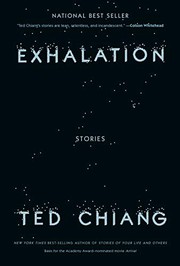 +
+Exhalation
Ted Chiang
Another collection of wonderfully crafted sci-fi short stories from a master of the genre.
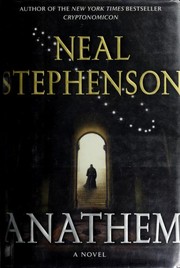 +
+Anathem
Neal Stephenson
Perhaps one of the most thought-provoking books I’ve ever read, mediating on the nature of knowledge and knowing itself. A beautiful blend of math, philosophy, and sci-fi/fantasy.
Biography
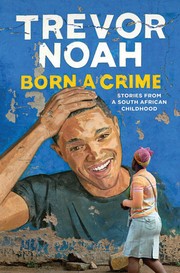 +
+Born a Crime: Stories from a South African Childhood
Trevor Noah
A heartfelt, honest, and at times, humorous, portrayal of what it was like growing up as a mixed race child in apartheid South Africa. Self-reflective and insightful.
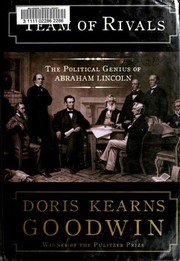 +
+Team of Rivals: The Political Genius of Abraham Lincoln
Doris Kearns Goodwin
A deep portrait of Lincoln’s leadership style and his genius for bringing together people and bringing forth the best from them. If only we had politicians of his stature today.
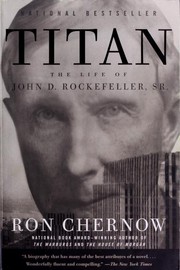 +
+Titan: The Life of John D. Rockefeller, Sr.
Ron Chernow
A compelling and powerful portrait of Rockefeller and, by extension, Standard Oil. Much more than one-dimensional robber baron caricature.
Business
 +
+An Elegant Puzzle: Systems of Engineering Management
Will Larson
An insightful analysis on how to be an effective engineering manager. Though I’m not an engineering manager, I still found this book contained a multitude of valuable insights in terms of how to communicate upwards to leadership, how to organize and orient teams, and how to think about scaling and growth (both of product and of the team itself).
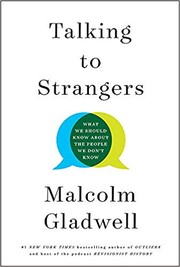 +
+Talking to Strangers: What We Should Know About the People We Don’t Know
Malcolm Gladwell
Written in the classic Gladwell style, this is an intriguing and thought-provoking read about why we trust strangers (and some of the consequences therein).
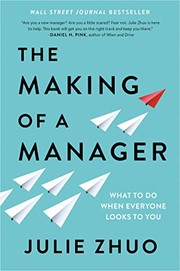 +
+The Making of a Manager: What to Do When Everyone Looks to You
Julie Zhuo
A valuable introduction to the art of management, written for someone who’s managing for the first time, but informed by the perspective of the trajectory of what it means to be a manager. Clear, accessible prose that leaps off the page. A pleasure to read.
Science
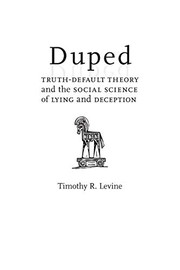 +
+Duped: Truth-Default Theory and the Social Science of Lying and Deception
Timothy R. Levine
I picked up this book because, as I was reading Gladwell’s Talking to Strangers, I kept seeing this book mentioned in the footnotes. The academic underpinnings behind some of Gladwell’s theses, this book explains how deception detection happens (or doesn’t). Notably, it’s not because liars look like they’re lying.
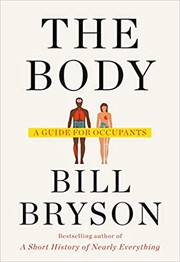 +
+The Body: A Guide for Occupants
Bill Bryson
Delightful. Educational and full of wonder.
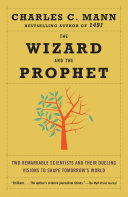 +
+The Wizard and the Prophet: Two Remarkable Scientists and Their Dueling Visions to Shape Tomorrow's World
Charles C. Mann
A powerful juxtaposition of two different, even opposed, perspectives of approaching technology and the future, set alongside the history of two men you’ve probably never heard of (though you should know about them!). Should we aim to seek technical solutions to our challenges (as wizards propose) or should we instead change our behavior to prevent or eliminate those challenges in the first place (as prophets propose)?
Fantasy
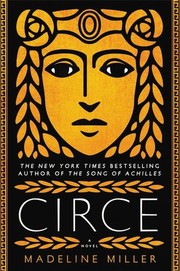 +
+Circe
Madeline Miller
A suspenseful tale that imagines Circe on her own terms while staying true to the mythology.
Humanities
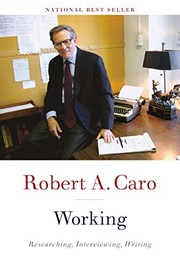 +
+Working: Researching, Interviewing, Writing
Robert A. Caro
An insightful peek into the process behind the incredible works of Robert Caro and why those works are so compelling.
Politics
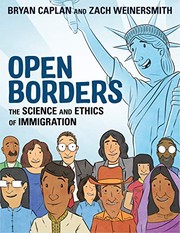 +
+Open Borders: The Science and Ethics of Immigration
Bryan Caplan
An evocative graphic nonfiction read that persuasively argues that the world’s present orientation toward immigration is not only unjust but also counterproductive and ultimately self-defeating.
Sports
 +
+Sprawlball: A Visual Tour of the New Era of the NBA
Kirk Goldsberry
A beautiful collection of charts and illustrations of how the NBA has evolved over the past decade. As a graph nerd and basketball fan, this book continually brought a smile to my face.
 @dominik